
SERVICESFIRE & SMOKE CONTROL DAMPERS
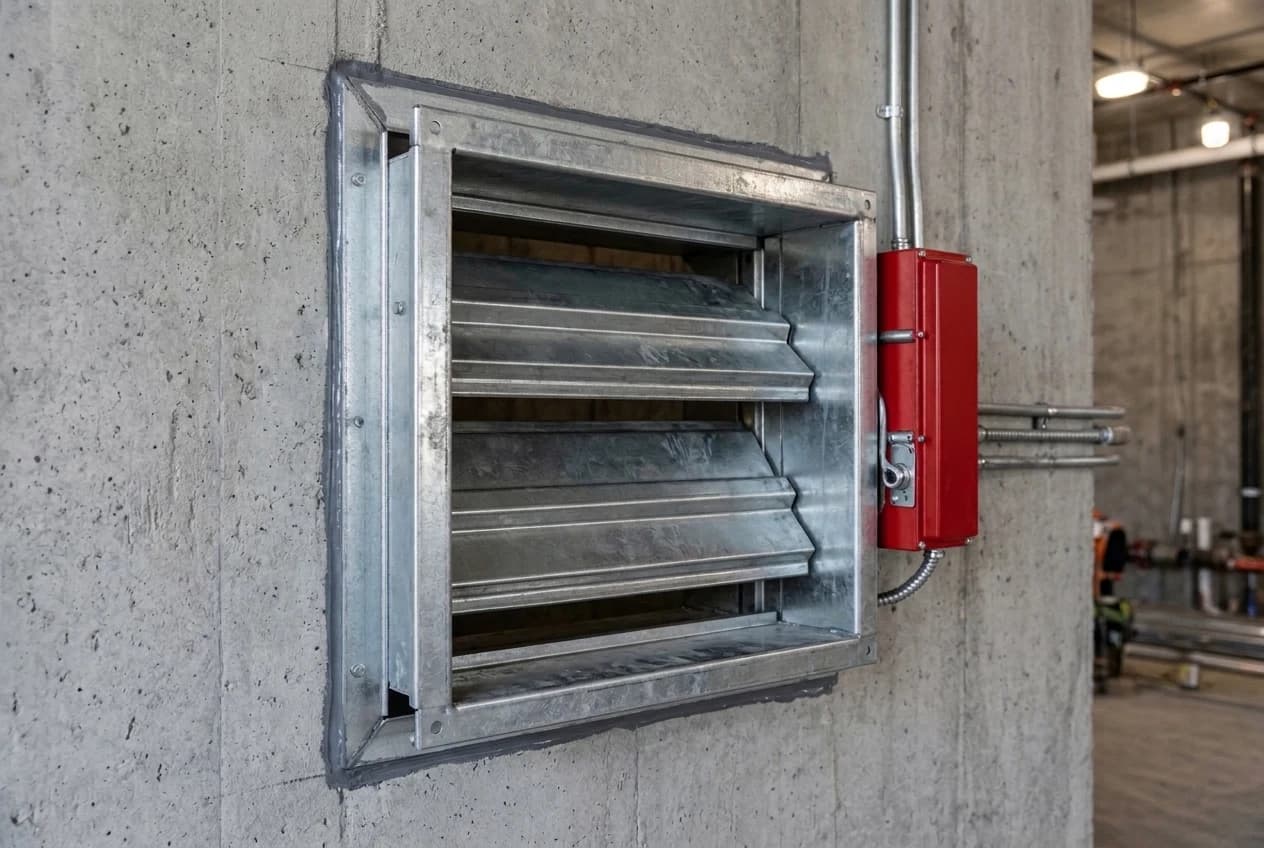
Motorized fire and smoke damper mounted in a fire-rated concrete wall penetration
04

Fire & Smoke Control Dampers

SIMPLE DESCRIPTION

Fire and smoke control dampers are mechanical devices installed within HVAC ductwork to help restrict the movement of fire and smoke through building ventilation systems.

HOW IT WORKS

Fire dampers typically close automatically when exposed to a specified temperature through a thermal release mechanism or actuator. Smoke dampers operate through actuators connected to smoke detection or building control systems. Combination dampers provide both fire and smoke protection functions.

KEY BENEFITS
Helps restrict fire spread through HVAC ductwork.
Controls smoke movement between building compartments.
Supports building fire compartmentation.
Integrates with fire alarm and building management systems.
Helps protect escape routes and adjoining spaces.
WHERE TO APPLY IT
HVAC duct penetrations through fire-rated walls and floors.
Commercial and high-rise buildings.
Hospitals and healthcare facilities.
Shopping malls and hotels.
Industrial and institutional buildings.
Mechanical and smoke-control systems.
FIRE-RESISTANCE RATING

Common fire damper ratings: 90 and 180 minutes

Fire dampers: Common UL-rated options include 90 and 180 minutes.

Combination fire/smoke dampers: Fire rating depends on the fire damper listing, with additional smoke-leakage requirements.

Smoke-only dampers: Classified by smoke-leakage performance rather than an hourly fire-resistance rating.

SYSTEM SPECIFICATION & STANDARDS
Fire, smoke and combination fire/smoke dampers.
Thermal release mechanisms and motorized actuators.
Compatible sleeves, retaining angles, supports and access panels.
Fire alarm and control-system integration, where required.
UL 555, UL 555S, EN 1366-2 and EN 13501-3.
SYSTEM TYPEFire / Smoke / Combination
FIRE RATING90 & 180 min (UL-rated)
STANDARDSUL 555 / UL 555S / EN 1366-2
INTEGRATIONBMS & Fire Alarm ready
FREQUENTLY ASKED QUESTIONS

What is the difference between a fire damper and a combination fire/smoke damper?

A fire damper closes on high heat via a thermal release or actuator to block flame spread, whereas a combination damper adds smoke-leakage control connected to smoke detection or BMS systems.

Which standards govern fire and smoke dampers?

Our damper installations follow UL 555, UL 555S, EN 1366-2 and EN 13501-3 with compatible sleeves, retaining angles and inspection access panels.

Fire-Rated Board & GlazingCompartmentation, Firestopping & Doors

Specifying PFP for a project?

Free site assessment: ratings review, scope outline and budget figures within one week.

REQUEST A QUOTE